
Initial Review
We confirm both parties’ locations, identity, nationality, marital status and the intended use of the marriage documents.
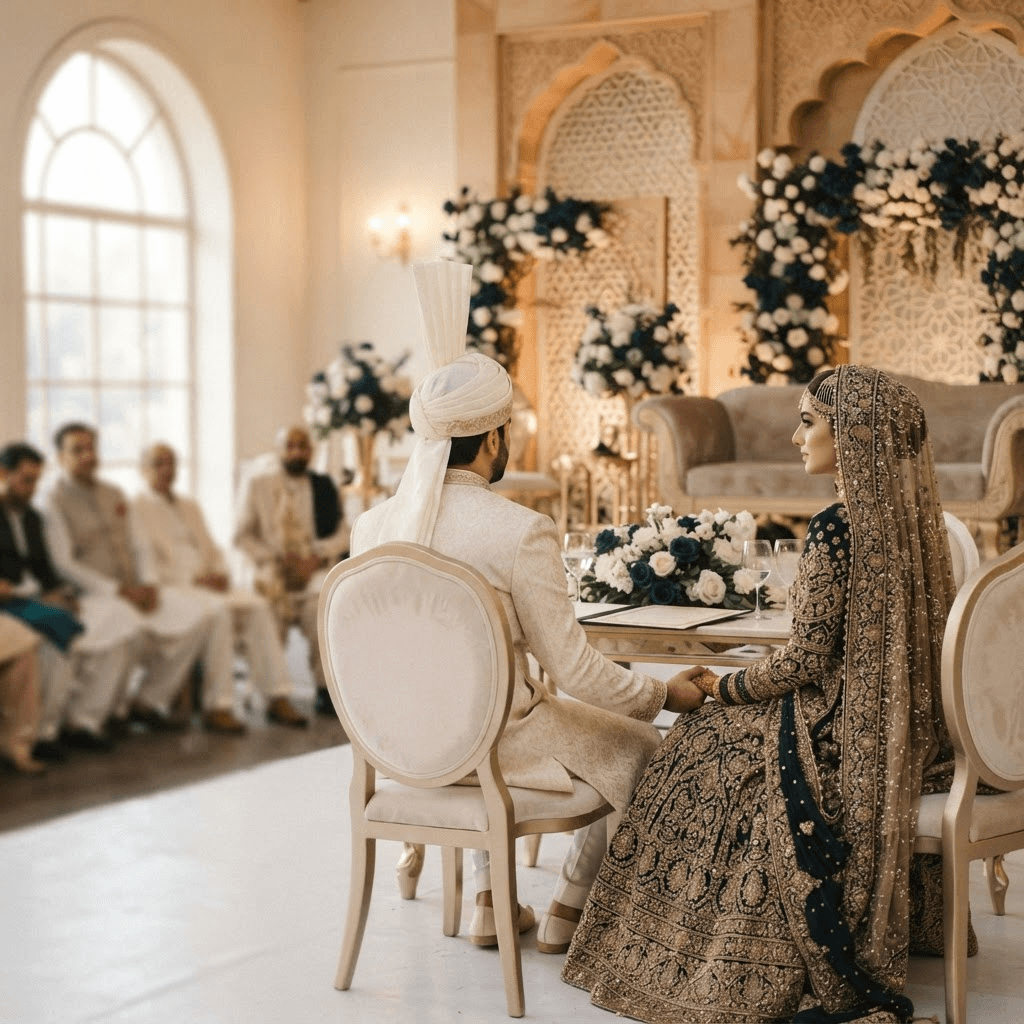
Online Marriage · Lahore
Nikah House provides a dedicated Online Marriage service page for couples connected with Lahore. We separate the religious Nikah process from civil registration, certificate requirements and later use of the marriage record, so each stage is planned according to the couple's circumstances.
Discuss Online MarriageService Scope
Online Marriage planning for couples connected with Lahore
Core Requirements
Identity, legal capacity, free consent, witnesses and accurate particulars
Documents
Nikahnama, registration planning, certificates and later document-use preparation
A Distinct Search Intent
People searching for Online Marriage are often trying to solve several different problems at once. One couple may only need a properly arranged Islamic Nikah while living in different places. Another may need a marriage record suitable for local registration. A third may already be married religiously and now needs to understand certificates, translation, attestation or use of the record abroad. These are related matters, but they should not be merged into a single promise.
For couples connected with Lahore, special attention is given to online marriage planning, consent, witnesses, documentation and the Punjab registration route. The correct route depends on where the parties are located, their nationality and marital status, how the ceremony is arranged, and where the resulting documents will eventually be used.
Nikah House therefore treats Online Marriage as a case-specific service. We first identify the actual objective, then separate the religious ceremony, civil registration and document-use stages so the couple can see what is required and what is not.
How It Works
We confirm both parties’ locations, identity, nationality, marital status and the intended use of the marriage documents.
Consent, witnesses, Wali where applicable, Haq Mehr, remote participation and any representative authority are settled in advance.
The Islamic ceremony and Nikahnama particulars are coordinated carefully with consistent names, dates and declarations.
Registration, certificate, translation, authentication or overseas-use requirements are reviewed as separate next steps.
Documents And Identity
Remote arrangements create no excuse for weak documentation. Names, dates of birth, identity numbers and marital-status details should be consistent before the Nikah record is prepared. Where previous marriages exist, the relevant evidence should be reviewed before making assumptions about eligibility or later registration.
Both parties must participate voluntarily and understand the marriage being arranged.
Witnesses, Haq Mehr and Wali or representation questions are addressed according to the circumstances.
Technology can support participation, but the underlying procedure and documentation remain the important part.
Registration, certificates, translation, authentication and recognition are planned according to the intended destination.
Frequently Asked Questions
Online Marriage is a broad search term. In practice, the religious Nikah, remote participation, civil registration, certificate issuance and later recognition are separate questions. Nikah House reviews which stages are relevant to the couple rather than treating them as one automatic process.
Remote participation may be possible in suitable circumstances, but identity, free consent, witnesses and any representative authority must be settled before the ceremony. The procedure should be planned around the parties and the intended later use of the documents.
The terms overlap in everyday searching, but they are not always identical. Online Nikah focuses on the Islamic marriage ceremony. Online Marriage may also refer to civil registration, certificates, recognition or cross-border document use.
No automatic promise should be made. Recognition depends on the procedure used, the law governing the marriage, the parties' legal capacity and the authority that later receives the documents.
Identity documents, present marital status, prior divorce or death records where relevant, witness details, Haq Mehr, addresses, nationality and the intended use of the final marriage record are commonly reviewed.
Marriage documents may be used as evidence in immigration or overseas applications, but the receiving authority applies its own rules. Translation, authentication, attestation or additional civil records may be required.
Discuss Your Circumstances